
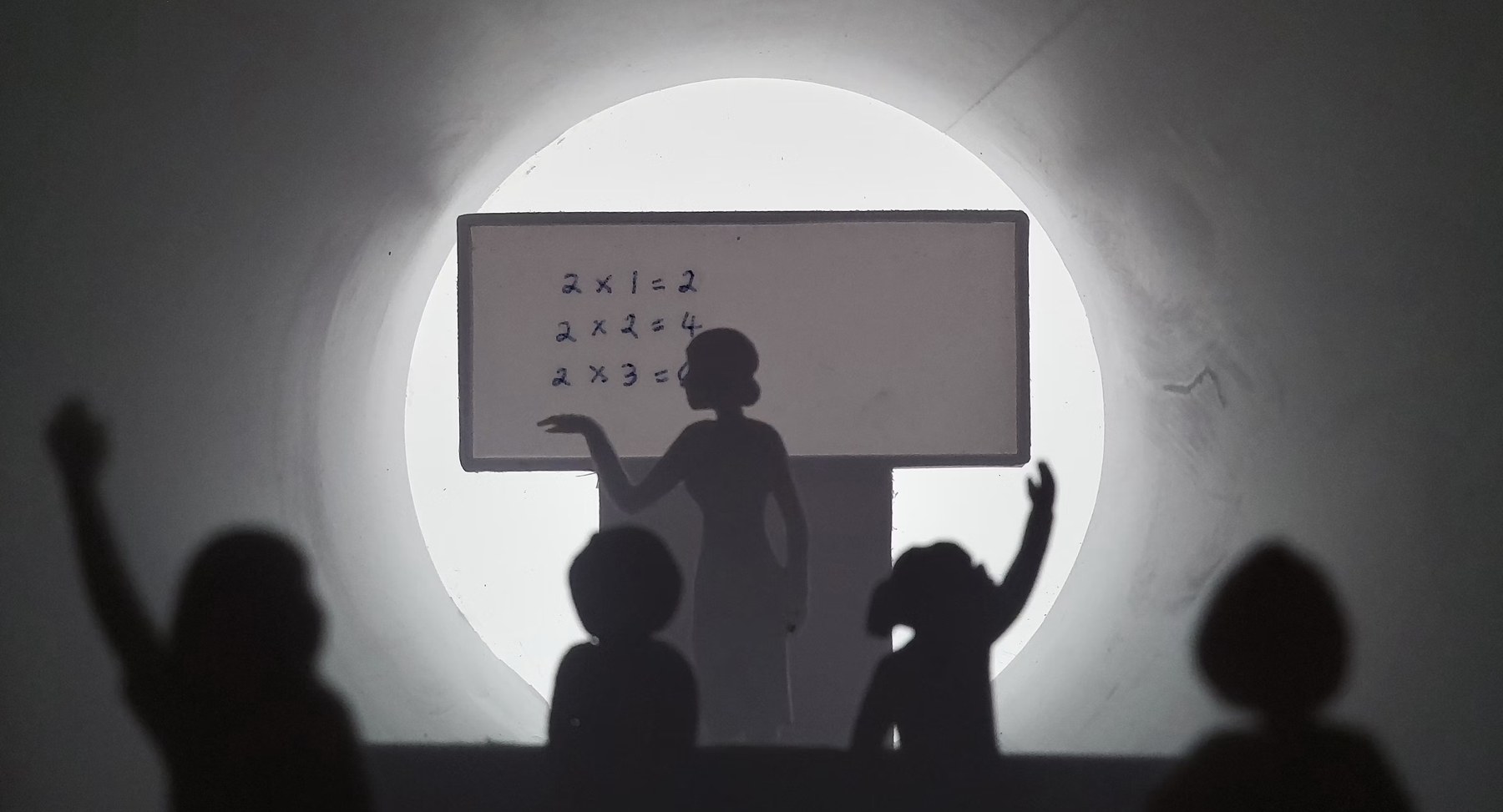
Half four on Sunday and it arrives. Not as a thought exactly — more as a change in the weather. You've still got hours of the weekend left on paper, and none of them are usable now, because tomorrow has already walked in and sat down.
And if you tried to explain it to someone outside the profession you'd end up talking about marking, which isn't really it. Plenty of jobs have a backlog. Very few have the specific thing that makes Sunday evening land the way it does for teachers.
Your week has no slack in it anywhere
Most jobs have give. A bad morning can be absorbed by a quiet afternoon; a meeting can move; you can shut a door for twenty minutes and reset.
Teaching has none of that. Period three happens at period three whether or not period two went badly. Thirty people arrive on a bell you don't control. There's no gap to recover in, no way to reschedule Year 9, and the one hour marked "free" already has three things in it. So Sunday isn't dread of a workload — it's dread of a week with no recovery built into it, which is a different and much more accurate fear.
This is also why "just don't take work home" advice bounces off. The problem isn't only the hours. It's that the hours you're in are unbuffered.
You'll be performing an emotion, all day, whether you have it or not
Here's the mechanism that most Sunday-night articles miss entirely.
From the first bell you are required to display warmth, patience and enthusiasm regardless of what you actually feel. Sociologists call this emotional labour — managing your own feelings as part of the job — and the research draws a distinction that matters enormously.
On emotional labour: Hochschild, and the substantial literature since.
Surface acting is displaying an emotion you don't have — smiling at a class while feeling nothing, or dread, or anger. Deep acting is genuinely working yourself into the feeling. Across many studies it's surface acting that predicts exhaustion and burnout most strongly. Faking it is measurably more expensive than feeling it.
Teaching demands a great deal of both, in front of an audience, for six hours, with no backstage. And on Sunday evening some part of you is already rehearsing tomorrow's performance — which is why an evening off can leave you tired before anything has actually happened.
And it's thirty relationships, not one job
The other load is relational. You aren't dreading "work" as an abstraction, you're carrying specific people: the one whose home situation you know about, the one who was fine last term and isn't now, the parent whose email you haven't answered, the class where the dynamic has gone wrong and you haven't worked out why.
Those don't switch off, because caring about them is the actual job rather than an add-on. Which means the standard advice — care less, detach, leave it at the gate — is asking you to do the thing that would make you worse at it.
What actually helps
Close last week before you look at next week
A large chunk of Sunday dread is Friday's unprocessed residue: the lesson that fell apart, the exchange in the corridor, the thing you said to a colleague and have thought about since. It went quiet on Saturday because you were busy; it comes back on Sunday because you've stopped moving.
So take ten minutes and go backwards before you go forwards. What's still on you from last week, and is there actually anything to do about it? Most of it resolves into nothing, it's done. The remainder gets a time — Monday break, Tuesday's meeting. A loop with a slot attached stops circling.
Turn "this week" into a list of actual things
The dread runs on vagueness. "This week" is a shapeless mass; four named items is a smaller and more manageable object. Write down what's genuinely on Monday, and be honest that most of Monday is fine — it's usually one lesson, one conversation and one deadline doing all the work. Naming them shrinks the fog to its real dimensions.
Name the specific class or conversation you're dreading
There's usually one. Period four Thursday, or the parent call, or the conversation with your head of department you've been circling. Say it plainly and decide the first move — not the whole solution, just the opening. If it's a conversation, say the first sentence out loud once. Rehearsing the opening removes most of the fear, because the fear lives in the not-knowing-how-to-start rather than in the conversation itself.
Protect one genuinely off block on Sunday
Not the whole day, which never survives contact with reality. One block — two hours — that is properly not-work, decided in advance so the guilt has nothing to argue with. Unbounded "I'll stop when I've done enough" guarantees you never feel you've done enough, and you end up with neither the work nor the evening.
Do the honest planning arithmetic once
If Sunday is genuinely required to make the week survivable, that's not a personal failing, that's the job as configured, and it's worth naming as a workload issue rather than absorbing as evidence you're too slow. Teachers are unusually prone to treating a structural problem as a personal one — partly because everyone around them is doing the same thing, quietly, on the same evening.
Questions people ask
Why do teachers get the Sunday scaries so badly?
Because a teaching week has no slack. Period three happens whether or not period two went badly, thirty people arrive on a bell you don't control, and there's no gap to recover in. The dread isn't about workload volume so much as a week with no recovery built into it.
Why am I exhausted before the week has even started?
Partly because you're already rehearsing the performance. Teaching requires displaying warmth and enthusiasm regardless of what you feel, and research on emotional labour finds that surface acting — showing an emotion you don't have — predicts exhaustion more strongly than the workload itself.
How do I stop thinking about school on a Sunday?
Close last week before you look at next week: ten minutes on what's still on you from Friday, with each item either released or given a time. Then turn "this week" into four named things, because the dread runs on vagueness. Then protect one properly off block, decided in advance.
Is it normal to dread one particular class?
Very. There's usually one that's doing most of the work of the dread. Naming it specifically, and deciding just the opening move rather than the whole solution, shrinks it considerably — the fear tends to live in not knowing how to start.
Should I just care less about my students?
That advice asks you to damage the thing that makes you good at the job. The aim isn't caring less, it's not being the only place the caring is stored — getting the specific worries out of your head and into something that holds them, so they stop running all weekend.
When it's more than Sunday
Dread on a Sunday evening is close to universal in teaching, especially in a hard term. If it's spread through the whole week, if you're crying before work or feeling sick on the way in, if you've stopped enjoying the parts you used to, or if it's persisting through the holidays — that's worth taking to your GP. Teaching unions run confidential support lines, and there are charities dedicated specifically to education staff. Using them is unremarkable and very common.
The honest bottom line
Sunday evening isn't a failure to relax. It's an unclosed week meeting an unbuffered one, plus the quiet knowledge that from 8:40 you'll be performing whether or not you feel like it. Close the week behind you, give next week edges and a name, decide the first move on the thing you're dreading, and take one block that's actually yours. The week will still be hard. It won't also be shapeless.
Related reading
The Sunday Scaries: Why Sunday Night Fills You With Dread · How to Prepare for a 1:1 You're Dreading · Burnout, or Just a Hard Stretch?
---
Mikoyi is a five-minute end to the day, and it works just as well on a Sunday evening. You say what's still on you from last week and what's coming, it reflects it back and helps you sort what genuinely needs doing from what you're carrying, and it remembers the classes and the people who keep coming up so you're not holding thirty of them in your head. Yours alone — nothing here ever touches your school. Free on the App Store.