
You didn't leave the house yesterday. You noticed at about nine in the evening, and it wasn't dramatic — you'd been busy, it was raining, everything you needed was here. It's happened a few times this month. And you've quietly registered that you feel worse on those days without being able to say exactly why.
Remote work doesn't announce this one. Nobody warns you that the thing you'll have to replace isn't the office; it's the several hundred small, unchosen things that came attached to leaving the house.
Your world can shrink without you deciding anything
Commuting delivered a set of things you never selected: daylight at a fixed time each morning, a walk you didn't schedule, incidental conversation with people you didn't pick, physical movement between locations, and a series of small transitions that told your body the day had phases.
None of that was on your calendar, which is exactly why nobody replaces it. When it disappeared, nothing got booked to take its place, and the loss is invisible on any given day — you just notice, a few weeks in, that everything feels flatter and slightly harder.
The unnerving part is that a shrinking world is very hard to see from inside. The calendar looks full. You spoke to eleven people. It doesn't feel like isolation because there's no obvious gap where something used to be.
Doing less makes you feel worse, which makes you do less
Here's the mechanism worth knowing, because it explains why this compounds rather than staying flat.
When mood drops, activity drops with it — you do fewer of the things that used to give something back, because they seem like more effort and less reward than they used to. But those activities were part of what maintained your mood, so removing them lowers it further, which reduces activity again. It's a self-reinforcing loop, and it's the basis of one of the more effective treatments for low mood, which works essentially by deliberately reversing it.
On behavioural activation and the activity–mood loop: Lewinsohn, Jacobson, and the subsequent clinical literature.
The relevant implication is counterintuitive: you go first, and the motivation arrives afterwards. Waiting to feel like going out is the exact wrong order, because the feeling is downstream of the going.
Remote work is unusually good at feeding this loop, because it removes all the friction that used to force activity. There's no meeting to physically attend, no one waiting at the desk next to you, nothing that makes the day happen to you. Every bit of activity has to be chosen, and choosing is much harder when you're already flat.
The light thing is real and largely ignored
One specific loss deserves its own mention. The commute reliably put you outside near the start of the day, and daylight is the main signal setting your body clock and influencing alertness and mood. Indoor light is dramatically dimmer than outdoor light, even on an overcast day — the difference is far larger than it looks, because your eyes adjust and hide it from you.
So a run of days without going out isn't just socially thinner; it's a genuine reduction in the strongest environmental cue your body uses to organise itself. Twenty minutes outside in the morning is one of the highest-return things available to a remote worker, and it costs nothing.
What actually helps
Book the leaving, don't wait to want it
Put it in the calendar like a meeting: out of the house by 9, or a walk at 12:30. Deciding in advance, while you're not deciding whether you feel like it, is the whole trick. On the days you least want to go are the days it does the most.
Fake the commute at least one end
A fifteen-minute walk before you start and after you finish reproduces a surprising amount of what you lost: daylight, movement, a transition, and a gap in which the day can be processed rather than compounded. If you only do one, do the evening one — it's the one that ends the day.
Work somewhere else once a week
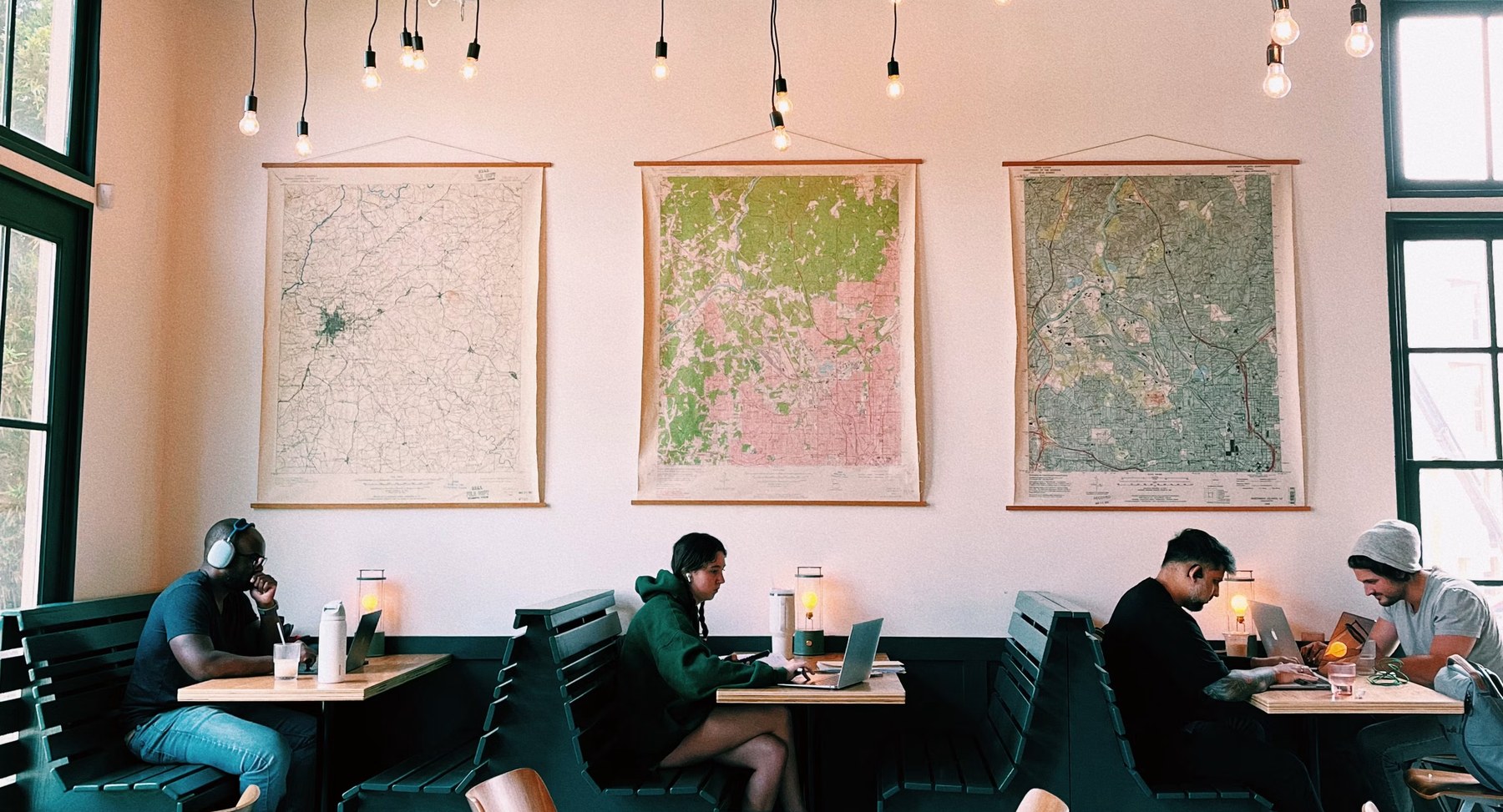
A café, a library, a co-working desk, a friend's kitchen. Not for the productivity — for the incidental humanity and the change of context. Being around other people working is a genuinely different experience from being alone with the same wall, even when you speak to nobody. Once a week is enough to notice.
Keep one fixed thing with other humans
Something recurring, in person, that isn't work and doesn't require organising each time — a class, a team, a standing pub night, a run club. Recurring beats spontaneous by a wide margin, because spontaneous requires initiating, and initiating is what stops happening first when you're flat.
Count the days, not the feeling
The feeling is unreliable and slow to alarm. The number isn't. If you can't remember the last time you were outside for something that wasn't a bin, that's your signal, and it's a much better one than waiting to notice you feel bad.
Questions people ask
Why do I feel worse on days I don't leave the house?
You lose daylight, movement, incidental contact and the transitions that give a day phases — none of which were on your calendar, which is why nothing replaced them. The effect is small daily and compounds over weeks.
Why don't I feel like going out even though I know it helps?
Because mood and activity form a loop: when mood drops, activity drops, which lowers mood further. Motivation arrives after the activity rather than before it, so waiting to feel like it is the wrong order — you go first.
Does getting outside in the morning actually matter?
Yes. Daylight is the main signal setting your body clock and influencing alertness and mood, and indoor light is far dimmer than outdoor light even on a grey day — your eyes adjust and hide the difference. Twenty minutes outside early is one of the highest-return habits for remote workers.
How do I stop remote work shrinking my social life?
Keep one recurring in-person thing that isn't work and doesn't need organising each time. Recurring beats spontaneous, because initiating is the first thing to stop when you're flat.
Is working from a café worth it if I don't talk to anyone?
Usually yes. Being around other people working is a different experience from being alone with the same wall, and it supplies the change of context that a fixed home setup can't. Once a week is enough to feel a difference.
When it's more than a quiet week
If you've gone days without leaving repeatedly, if you're turning down invitations you'd have accepted a year ago, or if the flatness has become persistent rather than occasional, that's worth talking to a GP about. Low mood and isolation feed each other, and remote work hides the pattern for a long time because the working day looks perfectly normal from the outside. Asking early is straightforward and effective.
The honest bottom line
Nobody is going to make you leave the house, and the cost of not doing it is invisible day to day and considerable over a month. Book it rather than waiting to want it, walk at least one end of the day, get outside early, and keep one recurring thing with other people. You go first; the wanting turns up later.
Related reading
Nobody to Debrief With · The Laptop in the Bedroom · Working From Home and Can't Switch Off?
---
Mikoyi is a five-minute end to the day, which matters more when nothing external ends it. You say how the day actually went, it reflects it back, and it remembers the patterns — including the quiet ones you'd otherwise only notice weeks later. Yours alone; nothing here ever touches your employer. Free on the App Store.